
She Saw What Others Missed: Minerva Hamilton Hoyt and the Making of a Desert Park
Not So Fast
126 years ago, on August 18, 1920, Tennessee ratified the 19th Amendment, granting women the right to vote. It came 144 years after the signing of the Declaration of Independence.
But long before that moment, women were already shaping the places around them—often without recognition, and without waiting.
Minerva Hamilton Hoyt was one of them.
She arrived in California at the end of the 19th century, settling in Pasadena with her husband, a physician. By most accounts, she lived the life expected of her—engaged in civic organizations, active in cultural circles, and well connected. She served as president of the Los Angeles Symphony Orchestra and helped support local youth institutions.
The desert was, at first, a retreat.
On trips east into the Coachella Valley and what is now Joshua Tree, Hoyt found something that lingered: a landscape that felt at once spare and complete. It was not lush, not immediately inviting. But it held a kind of order that did not ask to be improved.
Over time, she began to notice it changing.
Desert plants—Joshua trees, cacti, native species that had taken decades to grow—were being removed in large numbers. Dug up, shipped out, replanted elsewhere. Landscapes thinned. In places, erased. What remained did not recover.
The desert, widely seen as empty, was being treated accordingly.
Hoyt’s response was not quiet.
She began organizing, first locally, then nationally. She founded the Desert Conservation League and turned to a strategy that, at the time, was unusual: she brought the desert to people who would never visit it.
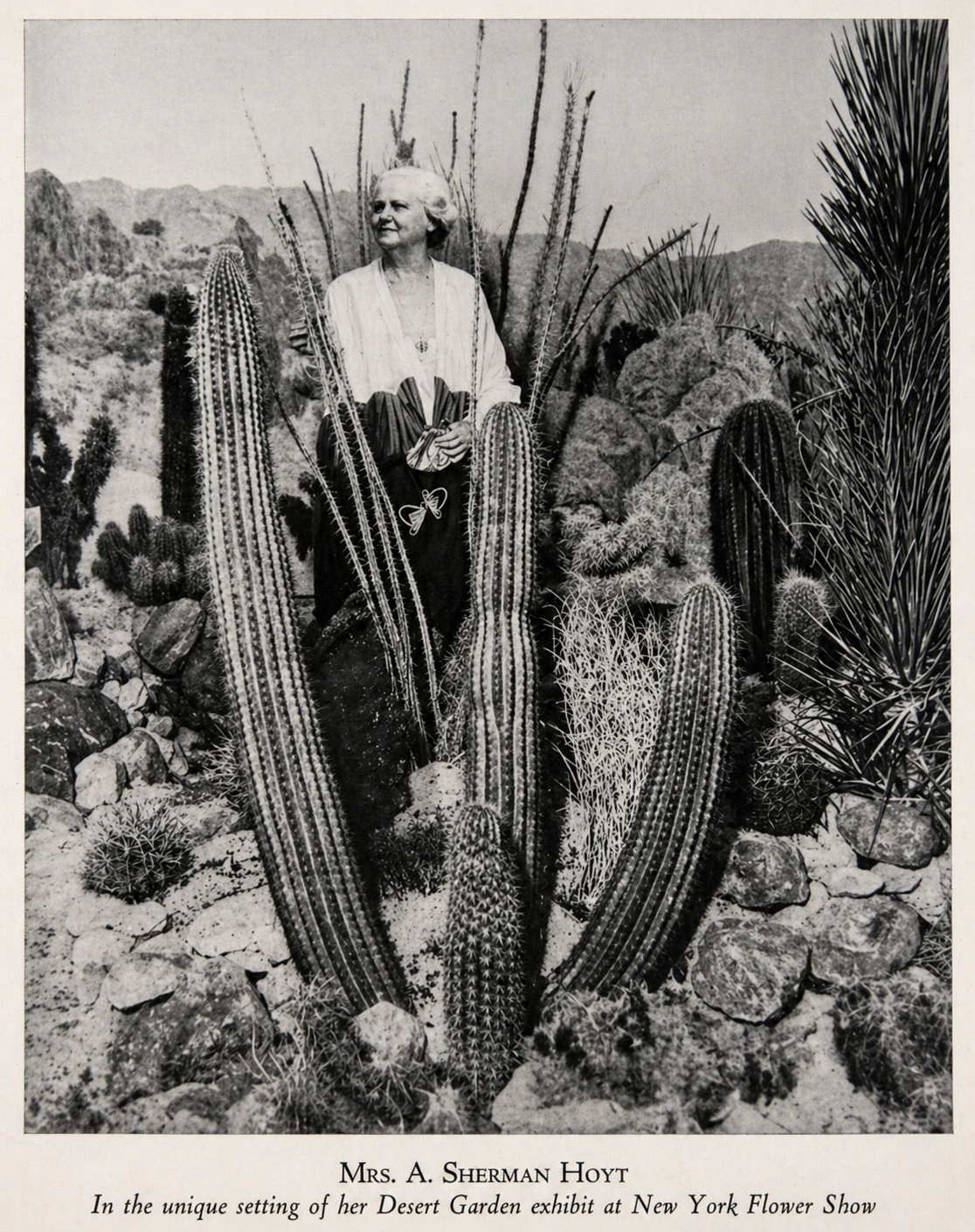
In 1928, she arranged for seven freight cars filled with desert plants, rocks, and sand to be transported to New York for a large-scale exhibition. The installation introduced Eastern audiences to a landscape they had largely dismissed. It was, in its way, a reframing.
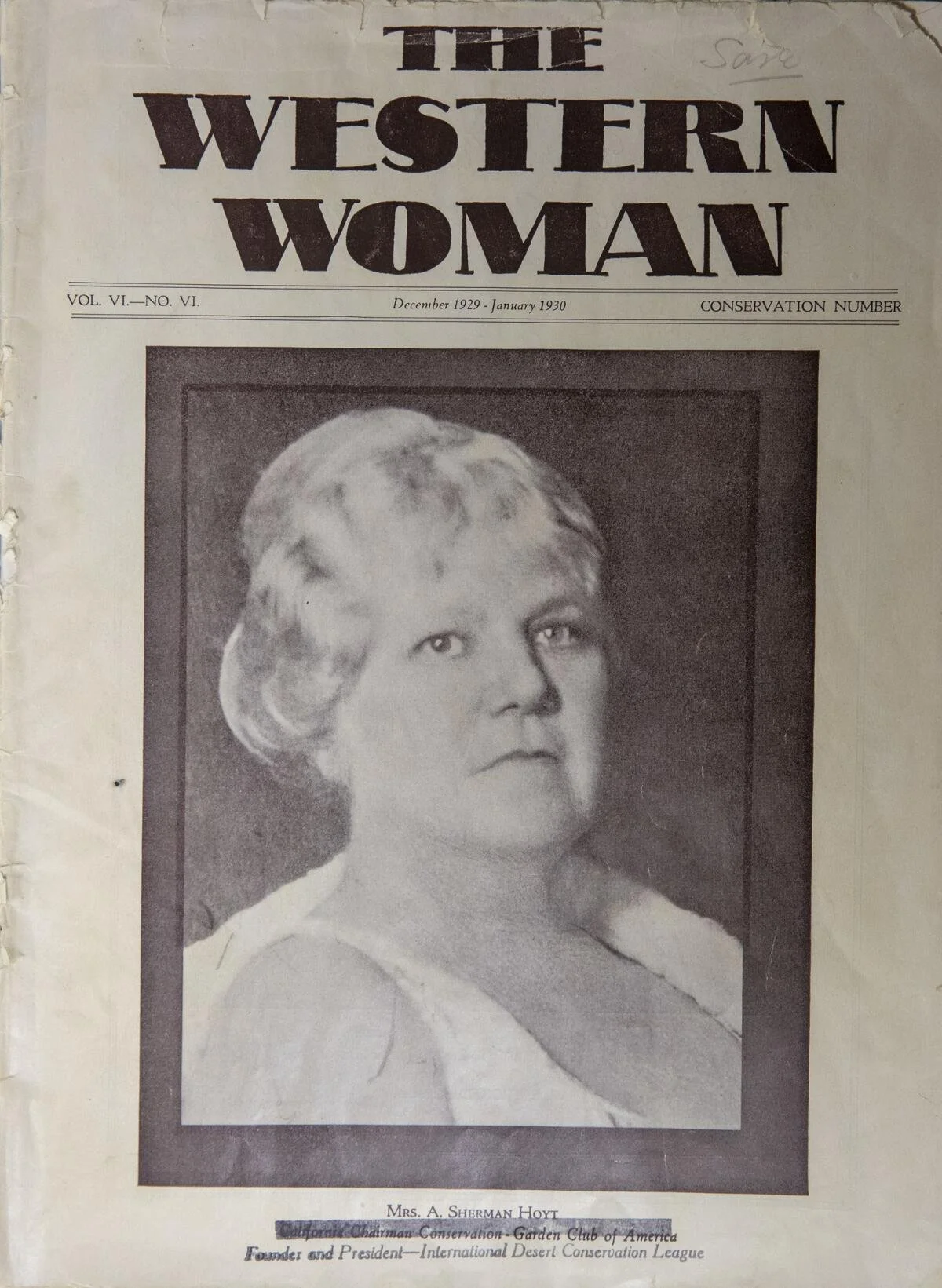
She continued the work abroad, exhibiting in London and helping to push for the protection of desert regions in Mexico. Her efforts there contributed to the preservation of a cactus forest, and earned her a reputation that followed her: the “Apostle of the Cacti.”
But exhibitions were not enough.
Hoyt came to believe the desert required something more durable than awareness. It required designation.
She built alliances with scientists and conservationists, gathered reports, and worked her way through political channels. When she traveled to Washington, D.C., she sought out President Franklin D. Roosevelt. Accounts describe her waiting until she was granted a meeting.
Roosevelt, already interested in expanding the national park system during the New Deal, was receptive.
On August 10, 1936, he signed a proclamation establishing Joshua Tree National Monument.
The designation did not transform the landscape. It did something more subtle. It changed how the land would be treated going forward.
Hoyt continued her advocacy in the years that followed, but much of what she set in motion outlived her.
Her name now appears on the Minerva Hoyt California Desert Conservation Award, presented by the Joshua Tree National Park Association. It is given to those who continue the work of protecting desert environments—work that, by its nature, is never finished.
The pressures have changed. The landscape has not.
What Hoyt recognized nearly a century ago—that the desert’s apparent emptiness makes it vulnerable—remains true.
Preservation, then as now, depends on whether someone is willing to see what others overlook, and act before it disappears.